The lack of crowds is really quite stunning.
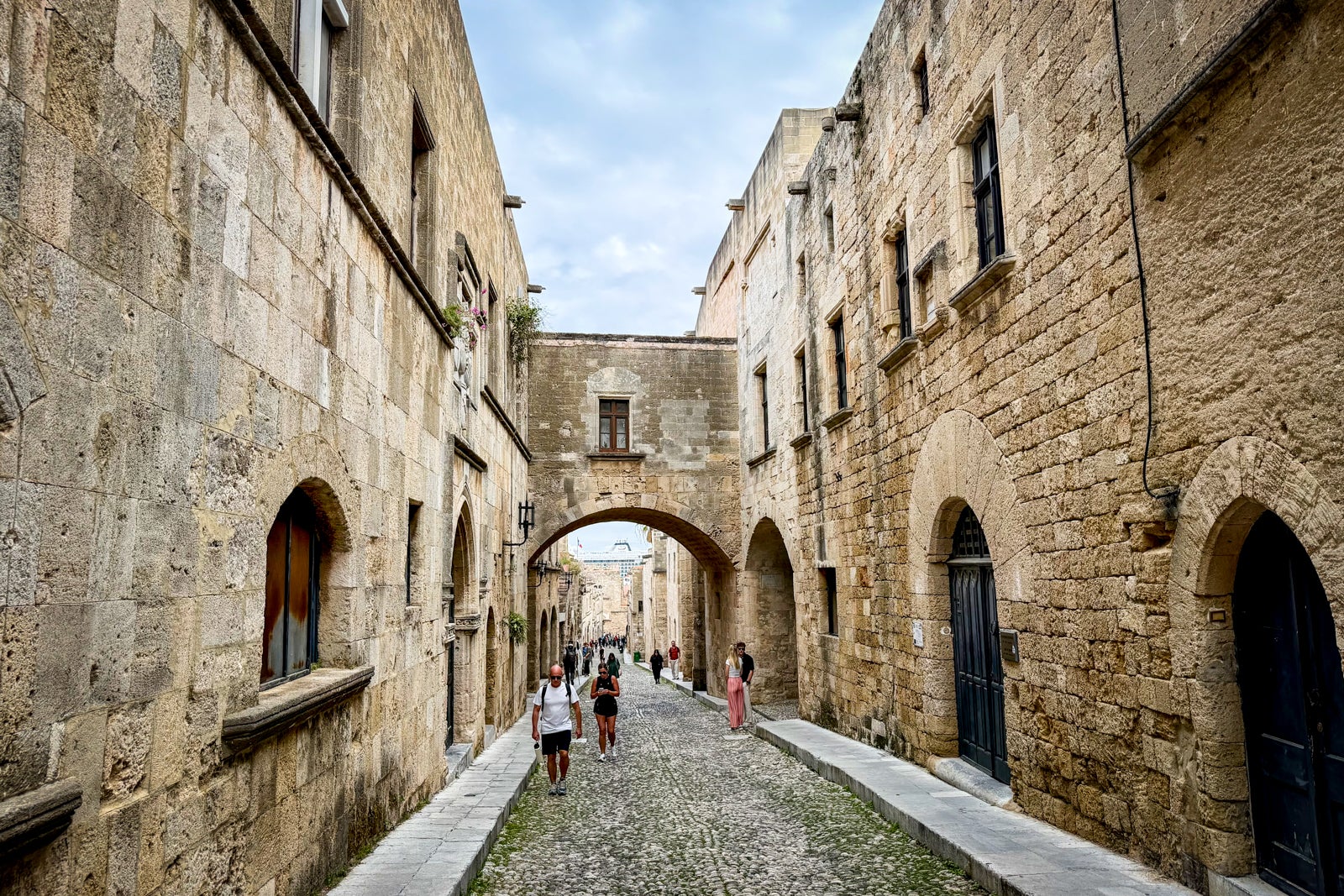
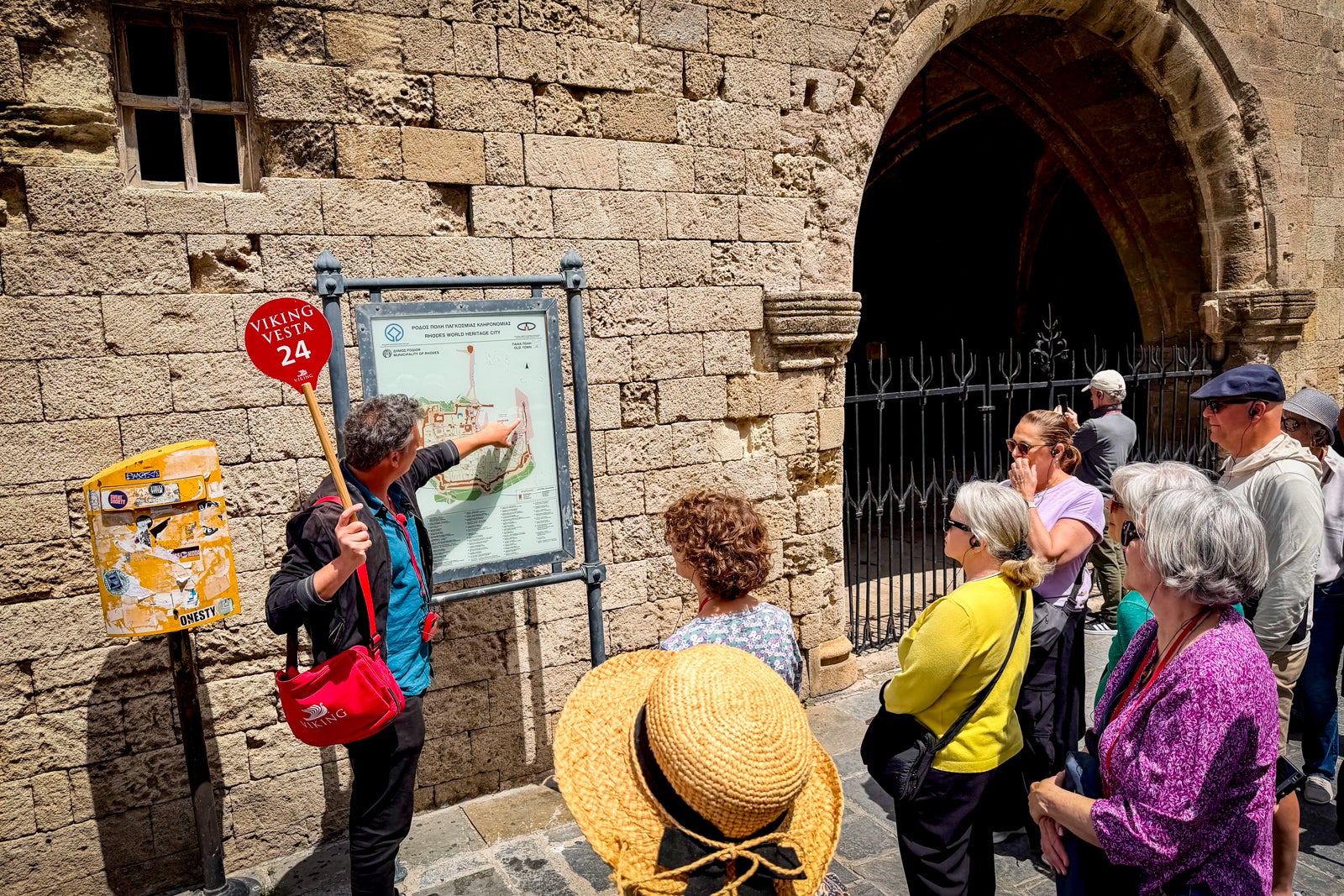
Our guide, Nikolaos, is leading us up the famed Street of the Knights in the Old Town of Rhodes — the notably preserved medieval fortress city on the Greek island of the same name — and it's unusually empty other than our small group of visitors.
It's also about as pleasant as can be, weather-wise. The temperatures are in the high 60s, with a fresh breeze and low humidity. The sun is peeking through scattered clouds.
In short, it's an ideal day to be touring one of the Mediterranean's most iconic places.
It's not by accident that I am experiencing it this way.
I have come to Rhodes in April — far earlier than most visitors to what is generally considered a summer destination — as part of one of Viking's "quiet season" cruises in the Mediterranean.
Taking place during the early spring, late fall and even winter, these trips have become a niche offering for the upscale line, which in recent years has deployed more than half its fleet to the Mediterranean during what traditionally has been considered offseason months. And as I am seeing firsthand, the sailings offer such advantages as reduced crowds and often a more relaxed, authentic atmosphere in ports, more pleasant temperatures and better value.
Or, to put it another way, the period between late fall and early spring may be the off season for travel to Mediterranean destinations such as Rhodes, but that doesn't make it an "off" time to visit.
Indeed, a Viking quiet season cruise may be the best way to see the region.
The allure of fewer crowds
As is typical for cruises in the Mediterranean, Viking's quiet season sailings make it easy for travelers to tour six or more of the region's iconic destinations in a single weeklong trip — something that isn't easy to do when touring by land.
But unlike most Mediterranean voyages, they take place at a time of the year when many of the pain points of travel to the region have faded away.
Perhaps the biggest of these is the crowding that affects the Mediterranean's most famous sites during peak times, from the Piazza San Marco in Venice to the Acropolis in Athens.
As I see on my sailing — a seven-night "Ancient Mediterranean Treasures" voyage from Athens to Istanbul — Rhodes is just one of many places in the Mediterranean where the crowds are far thinner than during peak season.
At many of the places that we visit — including the Greek island of Crete and the Turkish towns of Kusadasi and Cannakale — the planeloads of visitors that pack the destinations during the peak summer months of June, July and August have yet to arrive.
In many respects, it makes all the difference in the experience.
In Crete, known for its rugged mountain landscapes, ancient Minoan ruins and some of the best beaches in Europe, for instance, it means the freedom to wander around the main town of Heraklion and the nearby historical site of Knossos without navigating through a sea of selfie sticks.
Related: The 5 best destinations you can visit on a Viking cruise
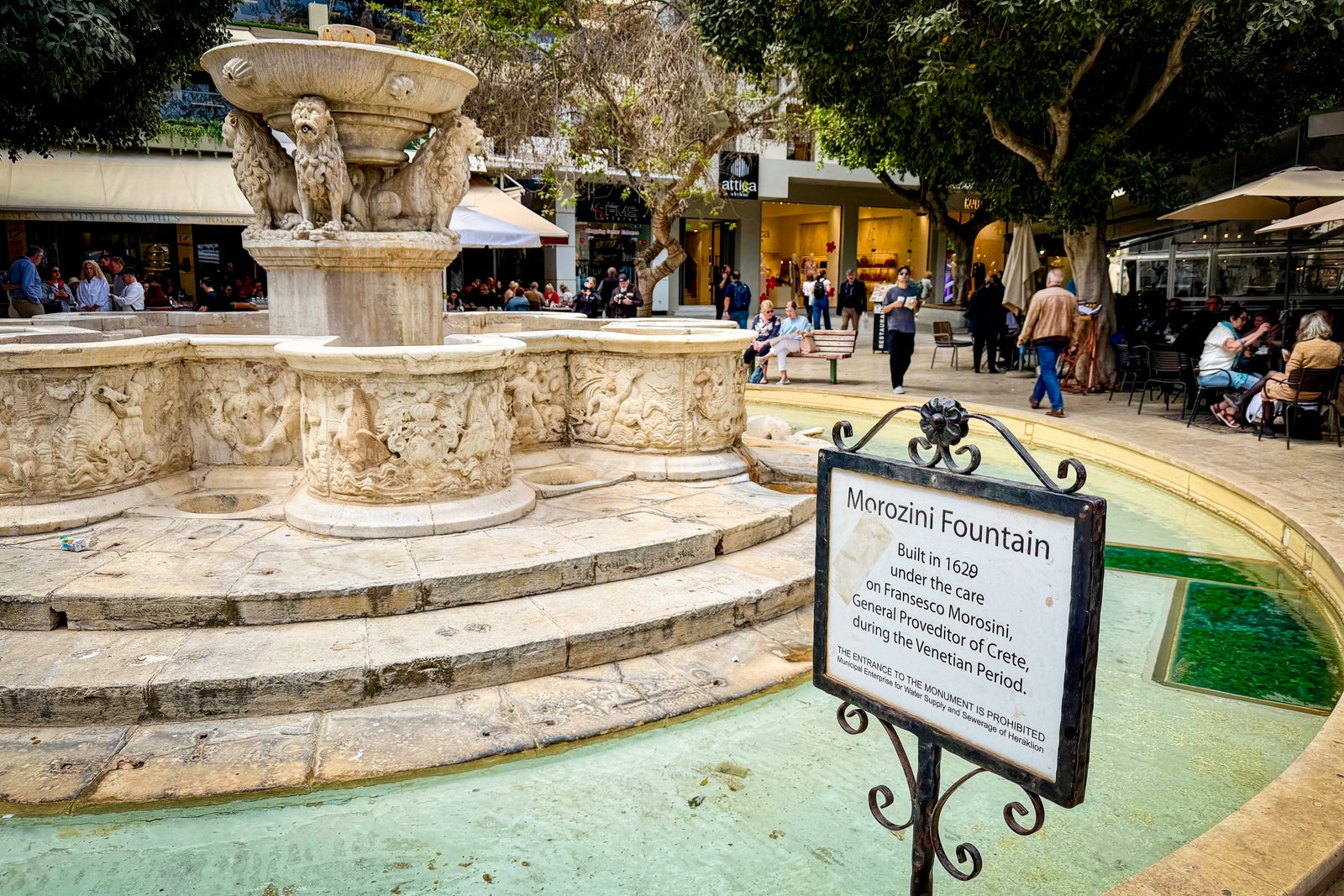
After joining an included-in-the-fare Viking tour of the Heraklion Archaeological Museum and its world-famous Minoan artifacts (where there are almost no other visitors other than those from my ship, the 998-passenger Viking Vesta), I stroll on my own to the town's iconic Lion's Square to find it far less busy than I remember from past visits during peak summer months.
Notably, the normally bustling cafes of Lion's Square still have plenty of open seating, and I can snap shots of its 400-year-old Morosini Fountain without being jostled by fellow tourists.
Not that I should be surprised. In a typical year, Crete draws just 300,000 visitors in April — a small fraction of the roughly 1.1 million visitors per month it gets during the peak months of July and August.
In March, when Viking also offers early-season sailings to Crete, the differential in the numbers is even more striking. Crete draws fewer than 20,000 visitors in March — meaning Viking passengers have the destination pretty much to themselves.
The only ship in town
Even when Mediterranean destinations such as the islands of Greece or the coastline of Turkey are relatively empty of fly-in visitors, their main port towns can get crowded if too many cruise ships arrive at once.
But as I experienced on my voyage out of Athens, this is rarely the case during the off-season period from late fall to early spring, as it's a time when most cruise lines have shifted their fleets to the warmer waters of the Caribbean or Asia.
In many of the places we visit, we are the only ship in town — something that changes everything as we head ashore.
In Rhodes in particular, it is a major game-changer.
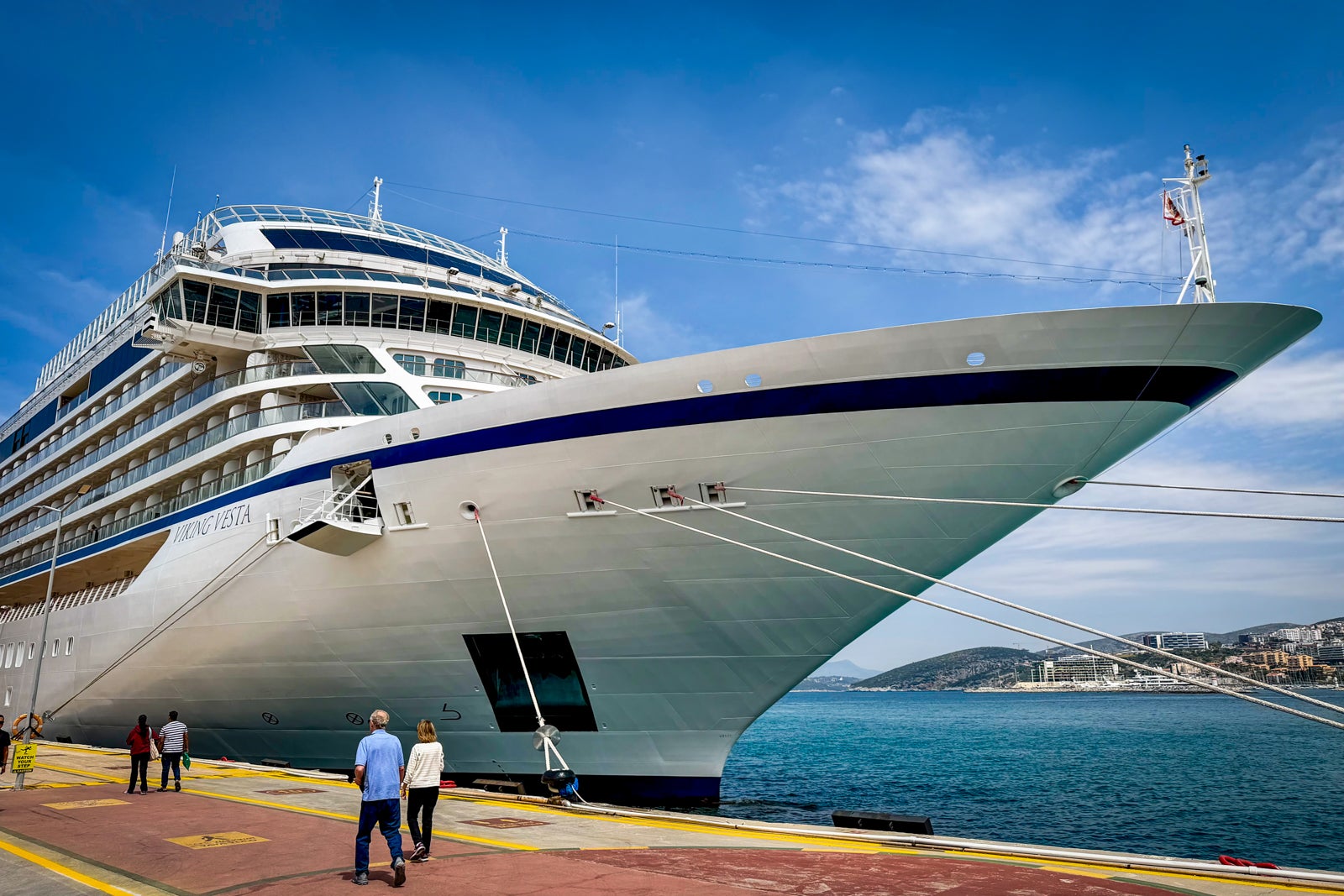
As many as five cruise ships a day can dock just outside the Old Town of Rhodes' medieval walls at the height of summer, unloading up to 10,000 visitors at once. And few of these visitors head anywhere but straight into its historical center, resulting in an almost impenetrable sea of people.
Such is the allure of what is often called one of Europe's best-preserved medieval towns and a UNESCO World Heritage site.

But on the day we dock, there are no other vessels in port, which means that I and roughly 900 fellow Viking Vesta passengers have an unusual amount of breathing room as we wander.
Meeting us at the dock for a walking tour, Nikolaos, our Viking-organized guide — tours in every port are included in the fare on Viking sailings — leads us through one of the medieval main gates along the walls to the blissfully uncrowded 14th-century Street of the Knights.
Stopping often in the middle of the cobblestone-lined roadway, which is empty enough that he can pause for long periods to talk, Nikolaos regales us with stories of the knights who ruled and defended the town during the medieval period.

As Nikolaos points out, the Street of the Knights is lined with Gothic "inns" that housed knights based on the regions from which they came — one for the knights of France, for instance; another for the knights of Italy. It's a sight to behold.
From there, we make our way to the Palace of the Grand Master, once the home of the leader of the knights, who were collectively known as the Order of Knights of the Hospital of Saint John of Jerusalem — more commonly called the Knights Hospitaller.

The palace is slightly more full of visitors, only because several groups of Viking passengers on walking tours all arrive at the same time. But only slightly.
The interior of the structure, which was rebuilt in the 1930s when Rhodes was ruled by Italy, is now home to Roman and Byzantine antiquities including elaborate mosaics and marble statues.
As Nikolaos leads us from room to room, showing off its treasures, our group of about 30 people has plenty of space to spread out.
A more relaxed atmosphere
In addition to being less congested with visitors than during the high season, many of the destinations we visit have a decidedly more relaxed atmosphere.
"This is best time of year to be here," Nikolaos, the Rhodes guide, tells us as he leads us through the town. "The Greeks are much more friendly at the beginning of the season than the end of the season."
As we walk through Hippocrates Square, the central crossroads for tourists and locals alike, he shouts out greetings to locals he knows who are ambling about.
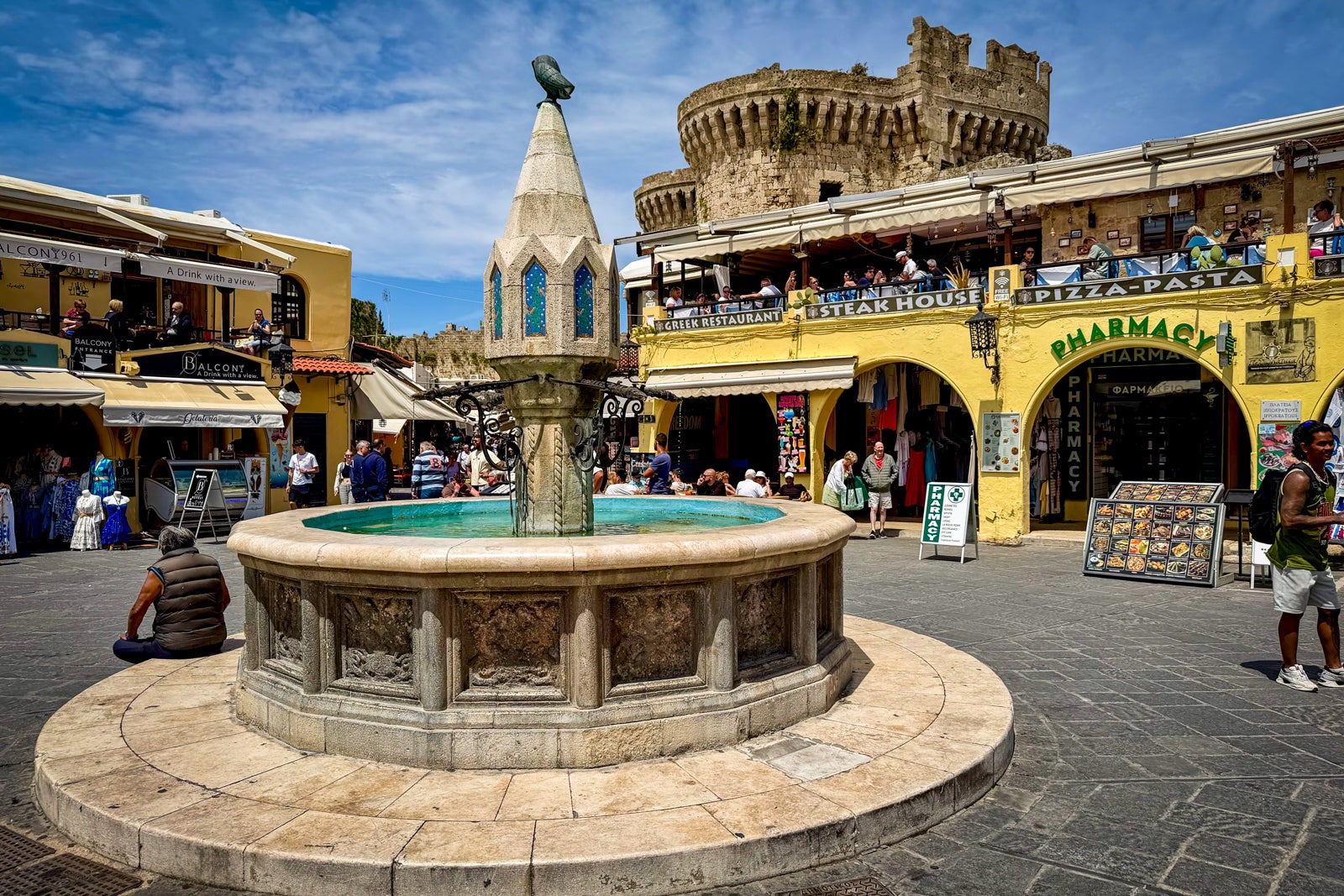
The tourist season in Rhodes lasts roughly from April to November, he notes, so it's just getting going, and the historical center has yet to be completely taken over by out-of-towners.
Two days earlier, when the cruise began with an overnight stay in Athens, that city's main tourist areas had a different atmosphere than at the height of summer, too.
Related: The ultimate guide to Viking ships and itineraries
During the summer, the narrow, scenic streets of the Plaka district are packed with tourists. But it felt more like a local neighborhood as I explored it alongside fellow Viking passengers on a walking tour after visiting the nearby historical ruins of the Acropolis.
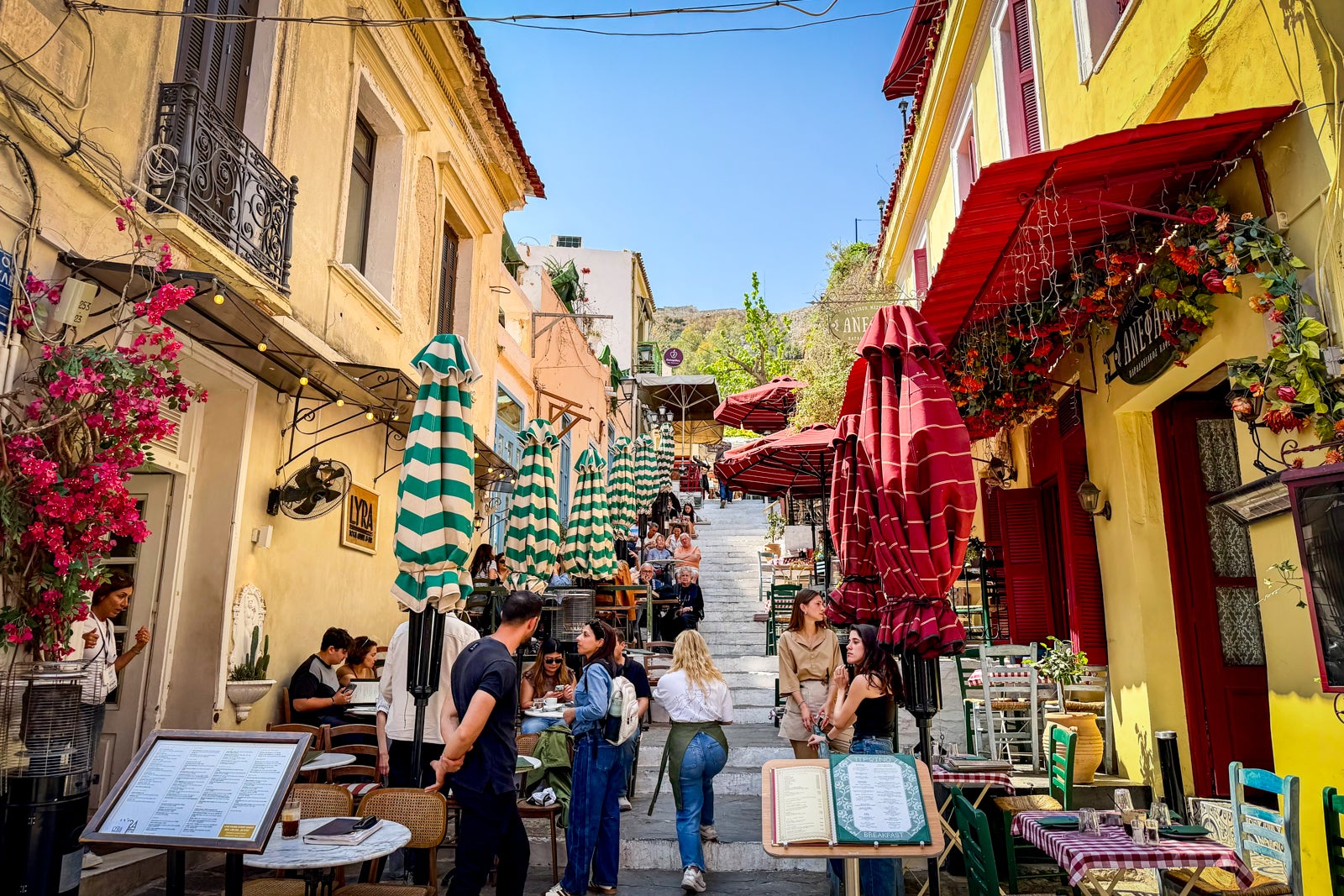
In addition to tourists, we passed lots of locals out and about, some on their way to work, others sitting in cafes and restaurants where it was no problem finding a table.
Even the Acropolis, home to the famed ancient temple to Athena known as the Parthenon, felt less touristy than normal, though it still was congested in places (it almost always is).
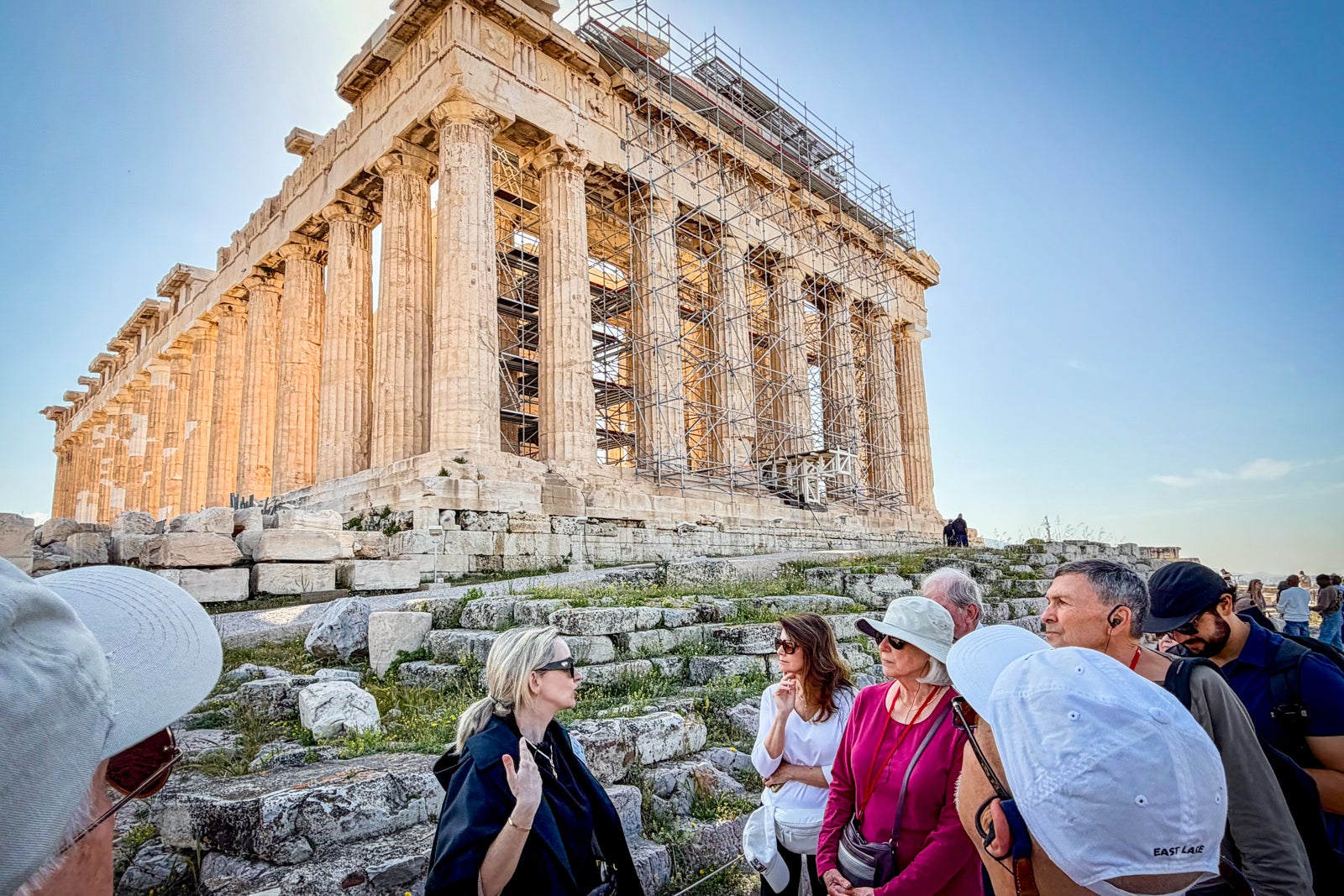
Notably, after arriving in Athens two days ahead of the cruise, I was able to buy a timed ticket to explore the Acropolis on my own on short notice (yes, I visited the Acropolis twice — once on my own and once on the Viking tour). During the summers, timed tickets for the site, which can draw 20,000 people a day, sometimes sell out days or even weeks in advance.
Better touring weather
What's the best weather to have during a trip to the Mediterranean? If your agenda is baking on the golden sand beaches along the coast of Rhodes, maybe during a stay at one of the seaside resorts, then the hot and sunny weather of the peak summer months of June, July and August makes sense. Ditto if you want to lounge on a towel along the coast of Turkey near Kusadasi or farther north in the area around Cannakale.
But if you're heading to these places to see their world-famous historic sites — the latter two destinations are the gateways to the Roman ruins of Ephesus and the Greek ruins of Troy, respectively — it's hard to argue that the cooler offseason temperatures don't offer a more pleasant touring experience.
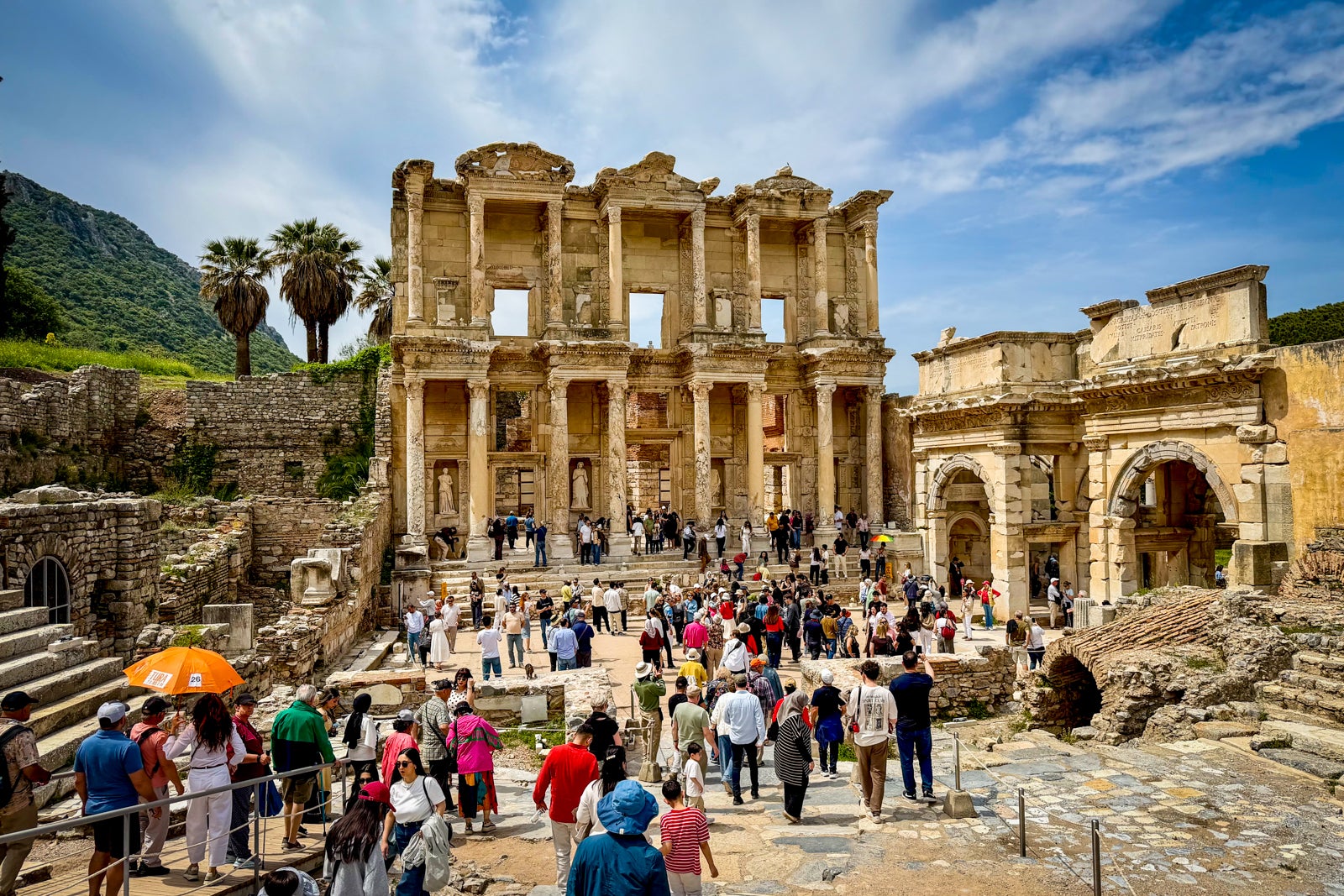
During my April sailing, the temperatures in all of the above locations hovered in the 60s during the days. It was sweater weather in the morning and warm enough in the sun by midday to be in a T-shirt.
In other words, perfect for touring.
If, like me, you've survived the ancient sites of Greece, Turkey, Italy and other Mediterranean countries during the height of summer, when heat and humidity rule the day, you know the downside.
Even in the middle of winter, the temperatures in some of the Greek islands including Crete and Rhodes, and along the coast of Turkey can be in the 50s.

That's puffer jacket weather, which in my mind is a much better environment for touring ruins than in sweat-inducing, energy-draining 90-degree heat.
Indeed, it still was puffer jacket weather in Istanbul when we pulled into the destination at the end of the sailing. Having toured Istanbul several times before during the height of summer, I can tell you that the cooler temperatures made for a far more enjoyable visit.

Istanbul has always been one of my favorite destinations on any Eastern Mediterranean cruise. It offers a wonderful combination of world-class historic sites and warm, welcoming people — as was evident again on this trip.
But I was thankful as our Viking-organized guide led us on a walking tour to such iconic sites as the 1,500-year-old Byzantine cathedral-turned-mosque Hagia Sofia and the nearby underground Basilica Cisterns that we weren't in the often unbearable heat of summer.
Ships built for the 'quiet season'
Viking's ocean vessels were custom-built for cool-weather itineraries with a retractable glass roof, known as a magrodome, over their main pool area — a feature that is relatively rare among cruise ships.
On warmer days, the roof slides open for a traditional poolside experience. On colder days, it can be closed for perfect climate-controlled lounging.
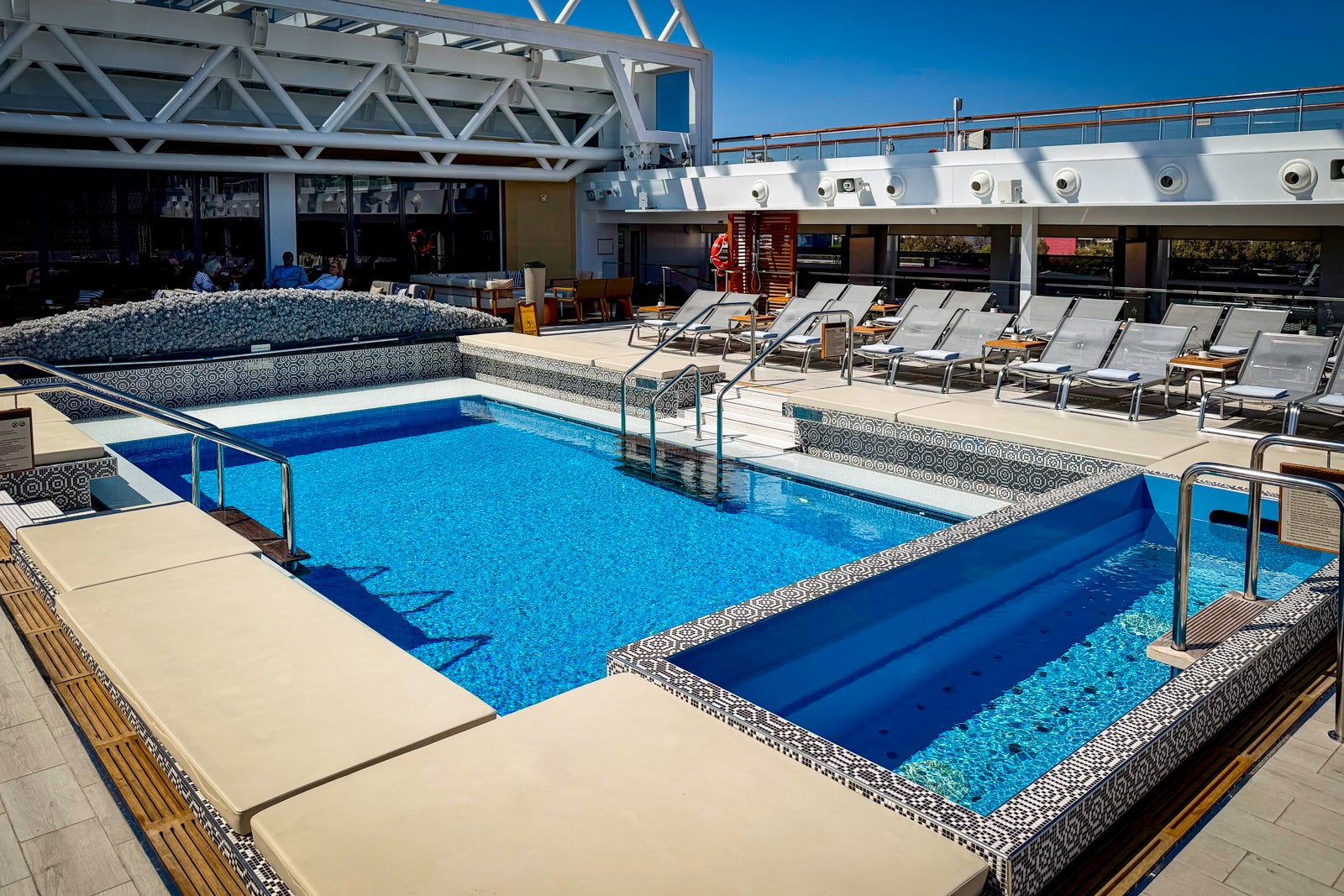
Built as all-weather ships designed for destination-focused itineraries, the adult-only vessels also are known for their Scandinavian-influenced interiors with relatively spacious, comfortable cabins and elegant dining areas. Entertainment leans toward lectures and enrichment programming tied to the ports of call.
Related: Sophisticated design, elegant service: Why I love Viking ships for touring the world
And better value
The value of Viking's "quiet season" cruises is another reason to book them — particularly for sailings during the winter months.
For 2027, January sailings of the same seven-night "Ancient Mediterranean Treasures" itinerary from Athens to Istanbul that I experienced start at just $2,599 per person — or $371 per person per day. March sailings start at $3,299 per person.
Compare that with starting rates as high as $5,299 per person between May and October.
And that's for the smallest, least expensive balcony cabins. The savings are even greater for premium cabin categories.
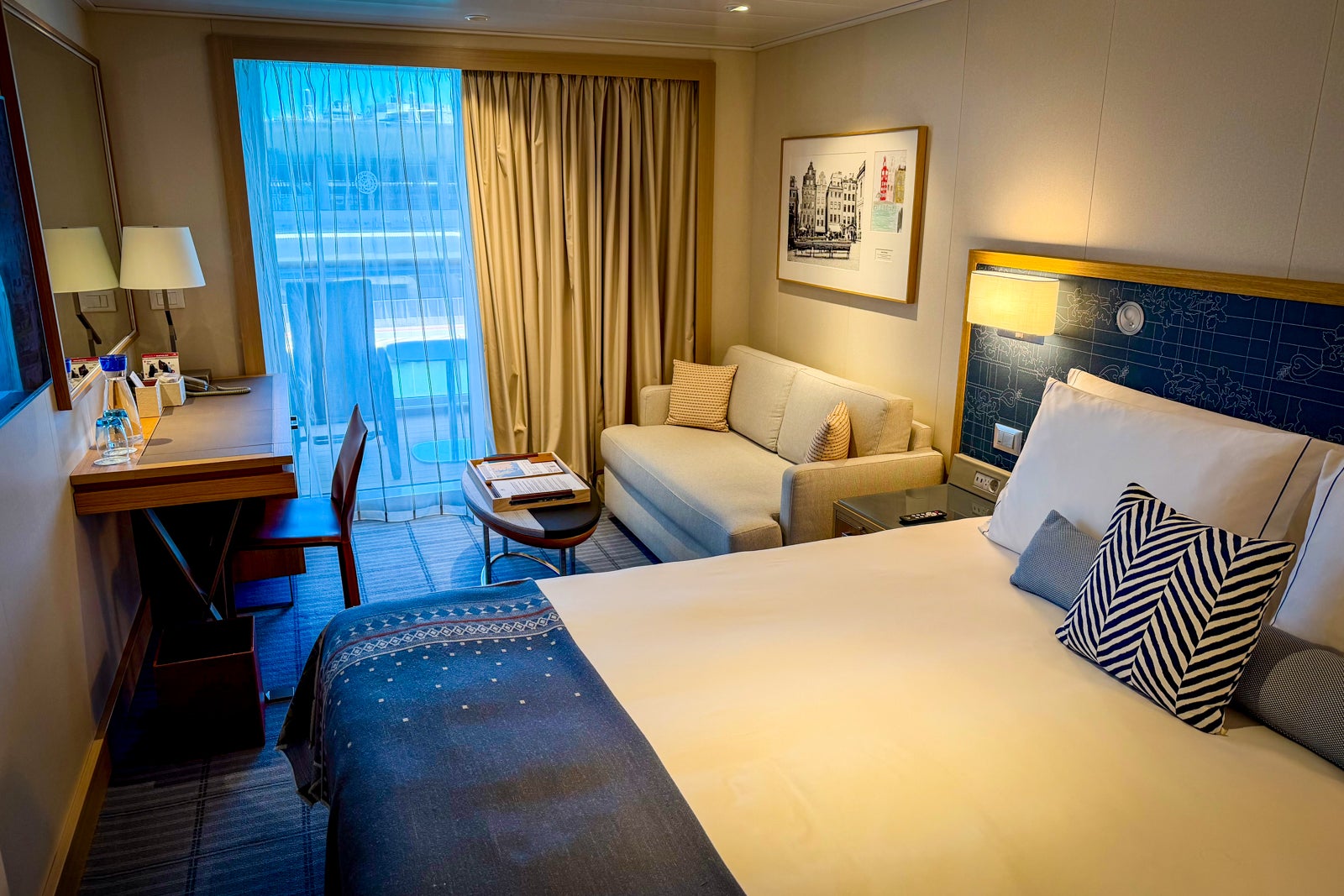
As of publication, more spacious Explorer Suites on the Jan. 20, 2027 departure of the "Ancient Mediterranean Treasures" itinerary started at just $4,799 per person — a 60% discount off the starting fares of $11,999 per person for the same cabin category on a May 2027 departure.
As is always the case with Viking trips, all of the above fares include not just a room on the ship but all meals, wine and beer with lunches and dinners and tours in every port. Unlike some lines, Viking doesn't charge for any of its onboard eateries.
Winter sailings also come with lower flat-fee rates for add-on international flights between the U.S. and Europe.
Related: The ultimate guide to Viking cabins and suites
For sailings in January and December of 2027, those rates start at just $799 per person for round-trip flights. For sailings in March of the same year, the starting rates rise to $1,299 per person.
By comparison, the airfare add-on costs start at $1,499 per person from April through October.
Bottom line
Summer is the high season for travel of all sorts to the Mediterranean, including cruises — but it's not necessarily the best time to visit the region. The off-season periods in early spring, late fall and even winter can offer such advantages as reduced crowds and often a more relaxed, authentic atmosphere in ports, more pleasant temperatures and better value.
Enter Viking, which has made sailings to the Mediterranean during what it calls the quiet season a core part of its business, with itineraries covering six or more of the region's most iconic destinations in a single easy-to-arrange and easy-to-experience trip.
Planning a cruise? Start with these stories:
- The 5 most desirable cabin locations on any cruise ship
- The 8 worst cabin locations on any cruise ship
- A quick guide to the most popular cruise lines
- 21 tips and tricks that will make your cruise go smoothly
- 15 ways cruisers waste money
- 17 best cruises for people who never want to grow up
- Cruise packing list: The ultimate guide to what to pack for a cruise
Editorial disclaimer: Opinions expressed here are the author’s alone, not those of any bank, credit card issuer, airline or hotel chain, and have not been reviewed, approved or otherwise endorsed by any of these entities.
from The Points Guy Articles https://ift.tt/jZwMID5


0 Comments